PUBLICATIONS

Eleven books on intelligence, capability, and the systems that hold them.

Two multi-book series and six standalone works by Srini Subramanian, Founder and CEO of XSYDA Technologies. Written from three decades of operating experience across enterprise technology, manufacturing, supply chains, and global capability — from beside the machines rather than above them.

Series · Four Books

The First Principles Series

A sustained inquiry into the four foundations being reshaped by machine intelligence: the value of human work, the substrate of computation, the architecture of intelligence itself, and the operating logic of the enterprise. Each book stands alone; together they form a coherent thesis about what changes and what must be rebuilt.

Cover of The Scarcity Shift by Srini Subramanian
First Principles Series · Book 1

The Scarcity Shift

Living, Working, and Leading in the Age of Intelligence

"As intelligence becomes abundant and cheap, the distinctly human becomes scarce — and dear."

For two centuries we priced human worth by what we could do and what we knew. Artificial intelligence is about to make both abundant. Drawing on more than three decades inside the great technology transitions — from scarce, shared computing to global enterprise systems to the age of intelligent machines — Srini Subramanian argues that this is not the end of human value but its relocation. As the machines master execution and expertise, the premium moves to what only people can offer: judgment, trust, taste, imagination, and purpose — the Human Premium. Clear-eyed and humane, this is a guide to thinking and leading well in the age now beginning.
Human Premium · AI & Work · LeadershipISBN 978-81-688267-1-7
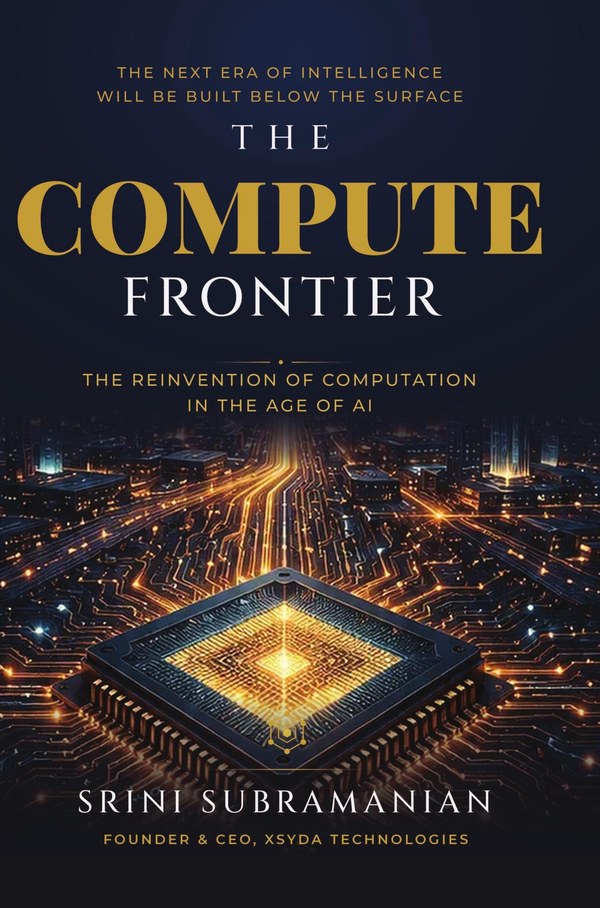
Cover of The Compute Frontier by Srini Subramanian
First Principles Series · Book 2

The Compute Frontier

The Reinvention of Computation in the Age of AI

"The next era of intelligence will be built below the surface."

For fifty years, computing advanced on a promise: more transistors, more speed, more for less. That promise is over. Artificial intelligence has pushed the machine beneath the mind to its physical limits — exposing the real frontier: not algorithms, but the foundations of computation itself. An architect's journey across the technologies and architectures that will define the next era — from silicon to photonics, from quantum to in-memory compute, from energy to sovereignty, to the new economics of intelligence.

Computing Architecture · Semiconductors · Post-Moore ComputeISBN 978-81-688267-2-4
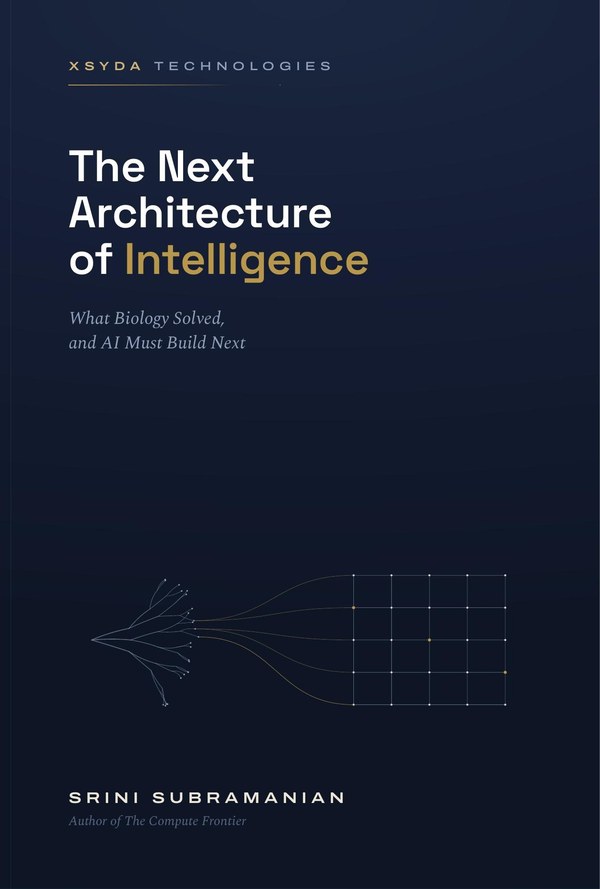
Cover of The Next Architecture of Intelligence by Srini Subramanian
First Principles Series · Book 3

The Next Architecture of Intelligence

What Biology Solved, and AI Must Build Next

"A neuron is not a nervous system, and a trained network is not an intelligence."

Modern AI borrowed a single idea from biology — the neuron — and built something remarkable from it. This book sets the one working example of general intelligence we have, the brain and nervous system, beside the machines we are building, faculty by faculty: perception, memory, learning, attention, control, regulation. It shows that today's AI has captured one slice of intelligence, the learned function, with extraordinary power — and that the rest of what makes a living system intelligent has been left on the table.

Artificial Intelligence · Computing Architecture · NeuroscienceISBN 978-81-688267-3-1
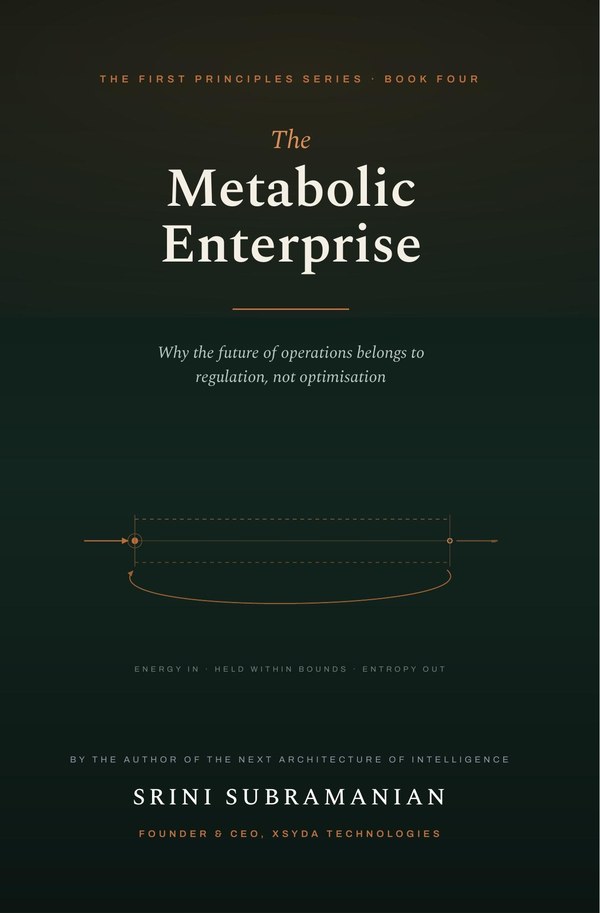
Cover of The Metabolic Enterprise by Srini Subramanian
First Principles Series · Book 4

The Metabolic Enterprise

Why the future of operations belongs to regulation, not optimisation

"For a century we ran the world's operations as a problem to be optimised. That century is ending."

Minimise cost. Maximise throughput. Treat energy, materials, distance and know-how as line items on a map. For a hundred years this was the highest skill in operations. Its successor is not a better algorithm but a different discipline. Regulation is the logic by which living systems stay alive. Seen clearly, a firm is an open thermodynamic system: it takes in energy and materials, performs work, and sheds disorder to persist. From that single shift follow hard, testable claims about how large a company can grow, what coordination truly costs, and why production returns to where energy and knowledge already are.

Enterprise Operations · Thermodynamics · RegulationISBN 978-81-688267-4-8
Series · Book One of Five Planned

The Precursor Series

A theory of technological capability built around a single object — the precursor graph — that traces what must exist before a thing can be made. The series argues that industrial strategy has been drawn against the wrong map, and that some capabilities, once lost, do not return.

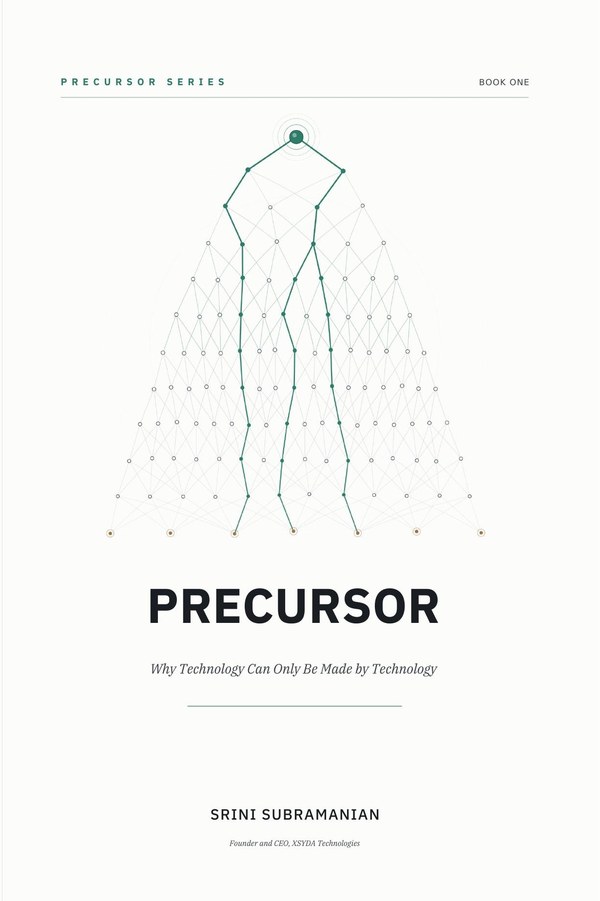
Cover of PRECURSOR by Srini Subramanian
Precursor Series · Book 1

PRECURSOR

Why Technology Can Only Be Made by Technology

"The graph of what must exist before a thing can be made."

A sustained examination of what technological capability is, how it is created, concentrated, and lost. Built on a single object — the precursor graph — the series traces the structure that determines not what a civilisation knows or owns, but what it can actually make. PRECURSOR draws the object industrial strategy has never drawn: the graph of what must exist before a thing can be made. It shows why a full specification cannot rebuild a factory, why the deepest capabilities have the fewest owners, and why some losses do not come back. Written from beside the machines, it is a theory not of repetition but of emergence.

Industrial Strategy · Technological Capability · National CapabilityISBN 978-81-688267-5-5
Standalone Works · Six Books

Independent Volumes

Six books written outside a series, each addressing a distinct question the moment presents: what happens to Global Capability Centres after AI, why better forecasts make supply chains more fragile, what education must test in the age of intelligence, why talent-rich nations still fail to lead in technology, how trust survives when signals become cheap, and why restraint may be the most decisive of leadership capabilities.

Cover of After Scale by Srini Subramanian

After Scale

The Next Decade of the Global Capability Centre

"What happens to the Global Capability Centre model as AI reshapes how work is performed?"

There are 2,117 Global Capability Centres in India alone. They employ 2.36 million people and contribute $98.4 billion to the economy. Yet almost everything written about GCCs comes from organisations that sell into the industry. After Scale asks a different question: what happens to the Global Capability Centre model over the next decade as Artificial Intelligence reshapes how work is performed, decisions are made and enterprises are organised? Drawing on economics, organisational theory and evidence from technological change, this book examines which capabilities disappear, which evolve, and what leaders must build next.

Enterprise Strategy · Global Capability Centres · IndiaISBN 978-81-689279-5-7
Cover of Demand Monoculture by Srini Subramanian

Demand Monoculture

Why Better Forecasts Are Making Supply Chains More Fragile

"Every forecast in your industry is getting better. Every shortage is getting worse."

Those two facts are connected, and this book explains how. In front of every buyer sits a number that is not private — a published lead time, an allocation notice, a supplier portal. Everyone sees the same reading at the same moment. Everyone responds correctly. And every response changes the reading. This is a supply chain failure with no villain in it. The instrument is accurate. The decisions are sound. The people are competent. And the system degrades anyway — because each crisis teaches a lesson that no calm period ever un-teaches.

Supply Chain · Enterprise Risk · Systemic FragilityISBN 978-81-689279-4-0
Cover of The Goldsmith's Test by Srini Subramanian

The Goldsmith's Test

A Guide to India's Education in the Age of Intelligence

"India tests the purity of its gold before it is trusted. Why do we ask less of the credentials that shape a nation's future?"

Every piece of hallmarked gold sold in India is assayed before it earns its mark. A degree will shape a life far more than any ornament. Almost nothing verifies it. Machine intelligence did not create this gap. It made it impossible to ignore. Capability is built through difficulty, and difficulty has become optional. Drawing on Indian and international research, on reforms that succeeded and reforms that quietly failed, and on evidence that has in some cases never been produced, this book offers a way to tell learning from its appearance. If education claims to develop human capability, what is the test that proves it?

Education · India · Human CapabilityISBN 978-81-689279-2-6
Cover of Brilliant but Behind by Srini Subramanian
A Research Monograph

Brilliant but Behind

Why Talent-Rich Nations Fail to Lead in Technology

"Talent is distributed across nations. Institutional capability is not."

A nation reaches the Moon's south pole, yet struggles to transform world-class research into globally competitive companies. A firm rich in research still fails to ship. Why? Brilliant but Behind argues that talent alone does not create technological leadership. Nations succeed only when they convert talent through four institutional capabilities: knowledge, capital, frontier manufacturing, and market access. Drawing on evidence from seven economies and an in-depth study of India, this research identifies where institutional conversion breaks down and provides leaders with a practical diagnostic for strengthening technological competitiveness.

National Capability · Technology Policy · Research MonographISBN 978-81-689279-1-9
Cover of Cheap Signals by Srini Subramanian

Cheap Signals

How AI Is Rewriting Trust, Social Media and Human Judgement

"A like used to mean someone looked."

For twenty years everything on social media meant something because it cost something. A follow cost a decision. A review cost an experience. Those costs have collapsed, and an action that costs nothing proves nothing. Verification was invented to prove who someone was. Then it became something anyone could buy. People are retreating into private groups that feel safer than they are. This book explains why, and identifies the one cost that cannot be automated. A machine can create, attend, speak and decide. It cannot bear consequence. Which leaves the question every leader, institution and parent now has to answer: when anyone can produce anything, how do you decide whom to believe?

Society · Trust · Human Judgement · Social MediaISBN 978-81-689279-3-3
Cover of The Unused Sword by Srini Subramanian

The Unused Sword

The quiet power of restraint in an age that worships action

"Restraint is the quality that keeps every other quality from becoming dangerous."

We have built an entire idea of leadership around action. We praise the decisive, the driven, the ones who move fast. Yet the choices that most often save a leader are the ones that leave no trace: the message never sent, the advantage never pressed, the power held quietly in reserve. The Unused Sword makes the case for restraint as the most overlooked, and in the age of intelligent machines the most decisive, of all leadership capabilities. Drawing on wisdom that surfaced independently across many civilisations, it argues that restraint is not weakness but strength under command — the one quality that keeps every other strength from turning destructive.

Leadership · Judgement · Wisdom TraditionsISBN 978-81-689279-0-2

The thinking behind XSYDA is written down.

These books are the intellectual foundation of the company — the questions we started from, the observations that shaped the platform, and the theses XSYDA is built to test in operating reality.

Request an Executive Briefing